
About & Team
Why Future Proof Telecom Services exists, and who's accountable for the engineering behind it.
Our Origin
Built because "good enough for now" isn't good enough for infrastructure meant to last decades
Future Proof Telecom Services was founded by Dido Kabengele Dibwe after watching the same expensive mistake repeat across multi-million dollar network builds: infrastructure designed for today's demand, with little room to grow, requiring costly overbuild within two or three years of completion — the same streets dug up again, the same communities absorbing another round of construction disruption that proper capacity planning could have prevented the first time.
Future Proof exists to close that gap with engineering discipline: a licensed, accountable practice that designs infrastructure to absorb real growth, not just current demand, and treats the permitting and funding readiness work behind it as engineering work, not paperwork. Future Proof Telecom Services has been in practice since 2020, and is a licensed APEGA Permit Holder (Permit #P15272), listed in the APEGA Permit Holder Directory.
In Dido's Words
"I started Future Proof Telecom Services after watching the same expensive mistake repeat across multi-million dollar network builds: infrastructure designed for today's demand, with little room to grow, requiring costly overbuild within two or three years of completion.
Overbuilding isn't just a line item that hits the budget twice. It means the same streets get dug up again, the same communities absorb another round of construction disruption, whether it's a single-family neighborhood or a dense multi-unit development that just settled back into normal life. That cost and disruption is almost always preventable at the design stage, for a fraction of what it costs to fix later.
Future Proof exists because 'good enough for now' shouldn't be the standard for infrastructure meant to last decades. Every design we deliver is built to absorb real growth, not just current demand — so the network gets built once, correctly, the first time."
Leadership & Licensure
Team
Future Proof Telecom Services is a licensed APEGA Permit Holder (Permit #P15272), in practice since 2020. Every engagement is delivered under that permit, backed by the professional engineering team below.
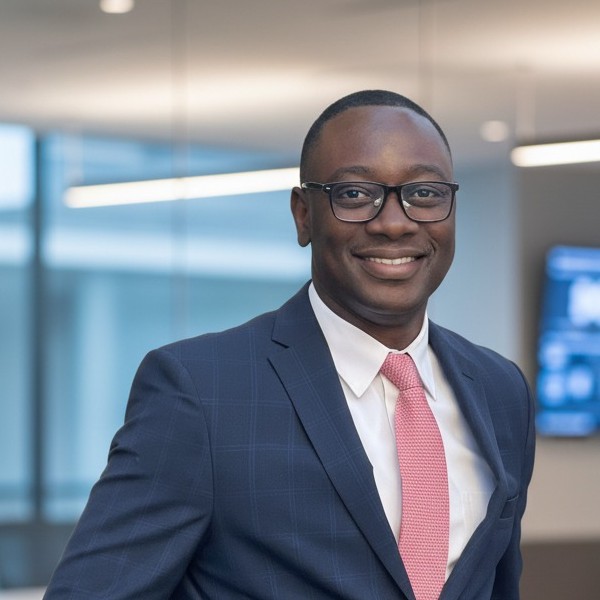
Dido Kabengele Dibwe
Founder
Dido Kabengele Dibwe is a telecom and infrastructure leader with over 10 years of experience driving large-scale data center, fiber, and network deployments across North and South America.
He leads end-to-end data center delivery across the North America region, partnering with Engineering, Construction, and Operations teams to keep site readiness and network turn-ups on track. He owns regional portfolio planning and sequencing, and manages vendor performance against acceptance and quality standards.
Before moving into data center delivery, Dido spent five years in MDU/MTU network planning, outside plant (OSP) fiber design, and permitting across U.S. markets, where he introduced build-tracking methods that improved schedule adherence and unblocked stalled deployments through municipal and utility negotiations. During this period, Dido was engaged through Ledcor Technical Solutions, Quanta Telecom Services, and Insight Global, delivering planning and design engineering on networks owned by major carriers including Comcast, Verizon, Bell Canada, and Telus, along with independent advisory work supporting ISPs, real estate developers, and municipalities on broadband strategy and vendor selection.
Dido holds a background in Electrical Engineering from Algonquin College and is a TCO-Certified Telecommunications Network Specialist. He founded Future Proof Telecom Services to bring that same build-once discipline to municipal and developer-led infrastructure across Canada.
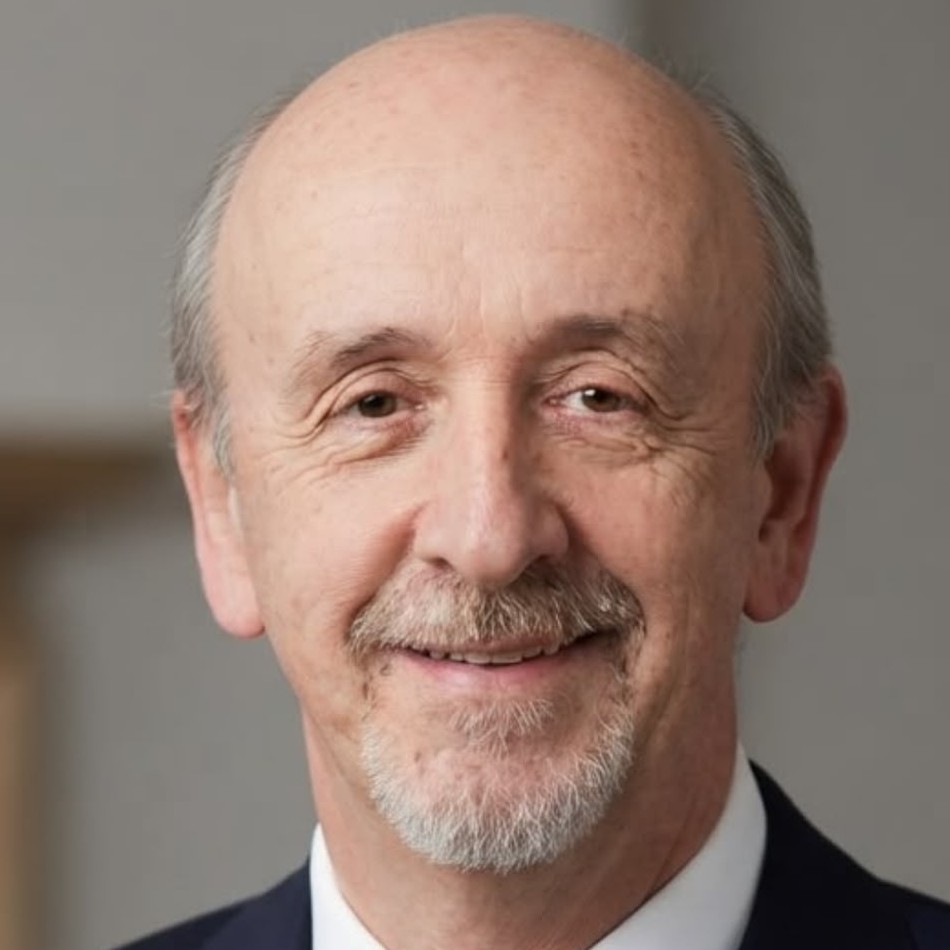
Richard Vasquez, P.Eng.
Professional Engineer
APEGA Registration: Professional Engineer (P.Eng.), Registration No. 166455
Richard is a Registered Professional Engineer with over 25 years of experience in electrical and telecommunications infrastructure, spanning inside/outside plant, field, and design capacities — work that underpins the engineering rigor behind every permitting and asset file Future Proof delivers.
During his time with Infrastructel in Quebec, Richard delivered OSP engineering for Bell Canada, responsible for the design of overhead and underground distribution lines using SimPASS software — including structural analysis for utility poles for medium (12.5kV) and low (120/240V) voltage lines, step-down transformers, pole loading, pole class, attachment heights, span lengths, guying, anchoring, sag-tension calculations, and joint-use regulations.
Most recently, Richard has worked on projects for Shaw, Telus, and Enmax, where he is involved in load calculation and strength checking against international standards (ASCE, NESC, IEC, and CENELEC) using PLS-CADD — including graphic pole deformation and loading, summary reporting of non-linear pole analysis results, and summary of joint support reactions at the base of the pole.
Richard holds a Bachelor of Science in Electrical Engineering and a Postgraduate Diploma in Electronic and Telecommunication Engineering, both from Universidad de Santiago de Chile, and a Master's Degree in Project Management from the University of Wisconsin–Platteville. He has also completed graduate-level certificates in High Stakes Leadership (University of Michigan — Stephen M. Ross School of Business), Project Management (University of California, Irvine — The Paul Merage School of Business), Solar Energy (Delft University of Technology), and Wind Energy (DTU — Technical University of Denmark).
Why the credential matters here
Design work, permitting, and funding applications for public infrastructure all carry regulatory and safety exposure. Future Proof Telecom Services is a licensed APEGA Permit Holder (Permit #P15272), meaning the engineering behind every deliverable — from route design to a permit submission to a funding package — carries a licensed engineering firm's professional accountability, not just a consultant's opinion.