
Services
Six service lines, each built around a specific failure point on municipal, developer, and data center infrastructure projects: design risk, permitting delay, funding uncertainty, undocumented assets, unmanaged right-of-way conflict, and data center connectivity gaps.
Outside Plant & Inside Plant Engineering & Design
Every permit, funding application, and audit we deliver starts with the design work underneath it. We provide P.Eng.-stamped OSP and ISP design — route engineering, cable and duct sizing, pole loading and structural analysis, and regulated crossing design — built to be buildable on the first submission, not redesigned in the field.
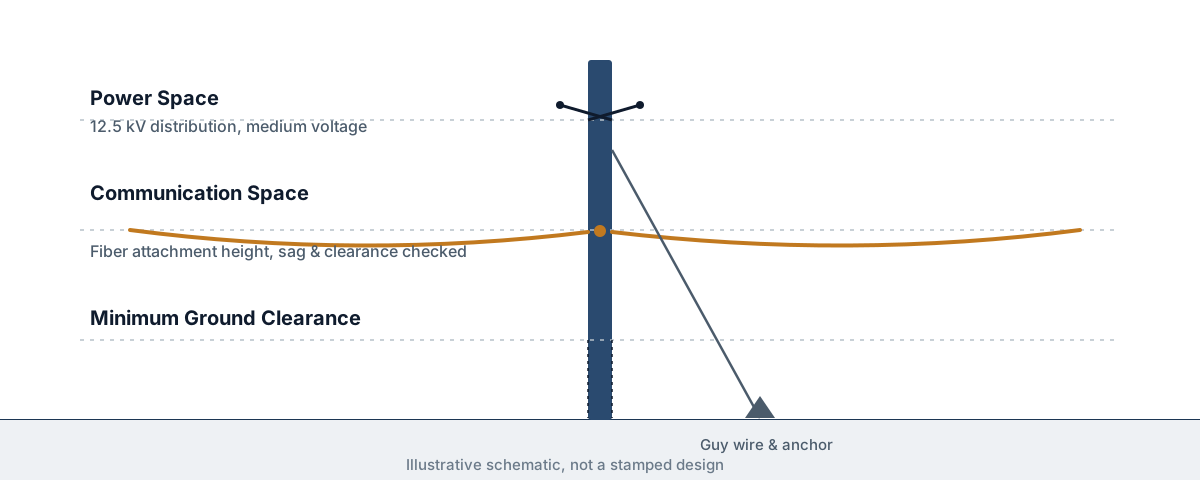
Illustrative schematic, not a stamped design.
What's included
Route and civil design, cable/fiber sizing, structural pole analysis (loading, sag-tension, guying/anchoring), regulated crossing design (rail, highway, utility), and as-built documentation.
Who it's for
ISPs, developers, and municipalities who need the underlying engineering itself — whether or not they need Future Proof's permitting or funding support alongside it.
Typical engagement
Engagement length depends on route length and design complexity — most projects run 1–4 months. We'll give you a firm timeline after a short scoping call.
Permit-as-a-Service
Right-of-way and construction permitting is where most fiber and OSP projects lose their schedule. We manage the process end-to-end — application prep, agency coordination, condition tracking, and as-built reconciliation — so your project keeps moving without your internal team having to become permitting specialists.
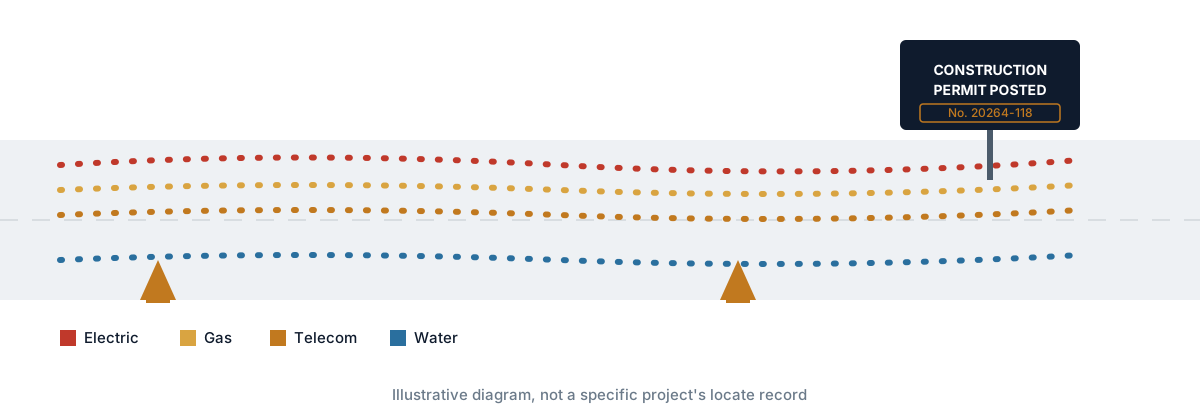
Illustrative diagram.
What's included
Permit application preparation, multi-agency coordination (municipal, provincial, utility), condition-of-approval tracking, and construction-phase compliance support.
Who it's for
Municipalities managing multiple concurrent OSP builds, and developers or ISPs building within municipal rights-of-way who need a compliant paper trail.
Typical engagement
Engagement length depends on jurisdiction count and project complexity — most projects run 1–3 months. We'll give you a firm timeline after a short scoping call.
Federal & Provincial Funding Readiness (CRTC Broadband Fund)
We prepare municipalities and operators to compete for federal and provincial broadband funding — most notably the CRTC Broadband Fund — with eligibility review, technical documentation, and application support built to withstand scrutiny.
What's included
Eligibility assessment, technical and financial documentation review, application drafting support, and compliance file preparation for post-award reporting.
Who it's for
Municipalities and network operators pursuing CRTC Broadband Fund rounds or provincial connectivity programs who need the application to survive technical review.
A note on terminology
We work within current Canadian federal and provincial programs. We do not advise on the U.S. BEAD program, and Canada's former Universal Broadband Fund (UBF) is closed to new applications.
Supporting Indigenous applicants
The CRTC Broadband Fund includes a dedicated stream for Indigenous applicants, with its own eligibility and application requirements. We're ready to support Indigenous communities and their partners preparing a submission under that stream, alongside our standard funding readiness work.
Infrastructure Optimization & Asset Audit
Before a municipality or developer can plan, fund, or sell outside-plant infrastructure, they need an accurate, P.Eng.-reviewed picture of what actually exists in the ground and in the air. We conduct independent audits that reconcile as-built records against field conditions.
What's included
Asset inventory reconciliation, condition assessment, capacity analysis, and a prioritized remediation or optimization plan reviewed by a licensed engineer.
Who it's for
Municipalities with legacy or inherited infrastructure, and developers acquiring or evaluating existing OSP assets as part of a transaction.
Typical engagement
Timeline varies depending on network size and record quality. We'll give you a firm timeline after a short scoping call.
Wholesale & open-access readiness
Following the CRTC's wholesale access ruling, operators subject to mandated third-party fiber access need to know precisely what they own and where it sits — the same records discipline our asset audits are built around. We support operators working through those access obligations as an extension of standard audit scope.
Dig-Once / Joint-Trenching Policy Advisory
Every open trench a municipality doesn't coordinate is a cost it pays again later. We help municipalities design and adopt dig-once and joint-trenching policy so telecom, water, power, and road work share excavation instead of repeating it — reducing long-run capital cost and disruption to residents.
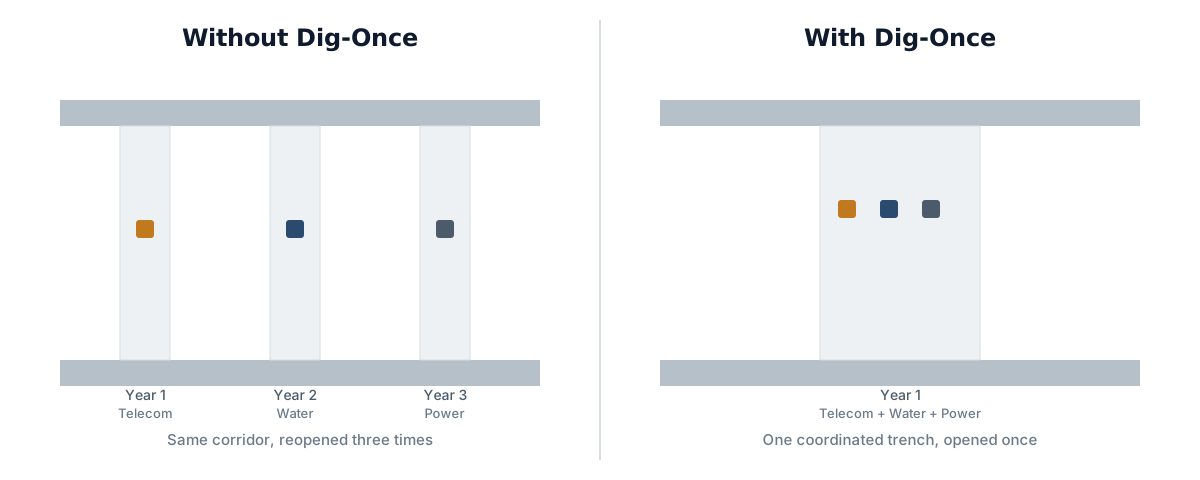
Illustrative diagram.
What's included
Policy drafting and benchmarking against comparable Canadian municipalities, interdepartmental coordination process design (roads, utilities, telecom), and a permitting workflow that flags joint-trenching opportunities before excavation is approved.
Who it's for
Municipalities without a formal dig-once policy who are seeing repeated excavation on the same corridors, or who want to attract carrier investment by lowering the cost of build.
Why it matters
Coordinated trenching is one of the few levers a municipality controls directly that lowers both its own capital costs and the cost of private fiber deployment in its jurisdiction.
AI Data Center Fiber & Permitting Enablement
AI data centers require fiber connectivity engineered and permitted to the campus before the facility can go live. We handle the outside-plant design and multi-agency permitting that connects data center sites to the network, on the same P.Eng.-backed timelines the rest of our permitting work runs on.
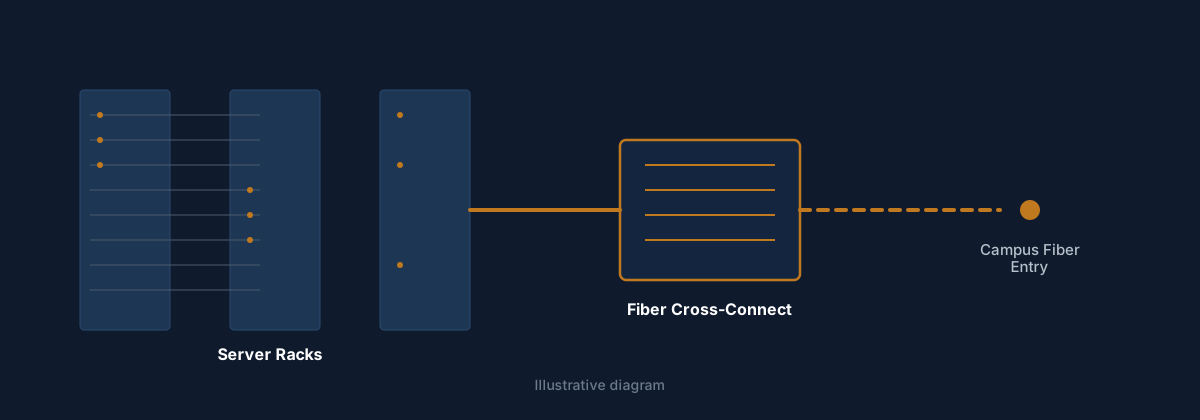
Illustrative diagram.
What's included
Fiber route design and permitting for data center campus connectivity, interconnect between facilities, and coordination with utility and municipal agencies on power/fiber co-location where relevant.
Who it's for
Data center developers and operators building or expanding sites in Alberta and other high-growth Canadian markets who need fiber connectivity engineered and permitted without becoming permitting specialists themselves.
Why it matters
This demand is driven by private capital and build timelines, not government funding cycles — connectivity readiness has to move at the pace of the facility, not a grant calendar.